
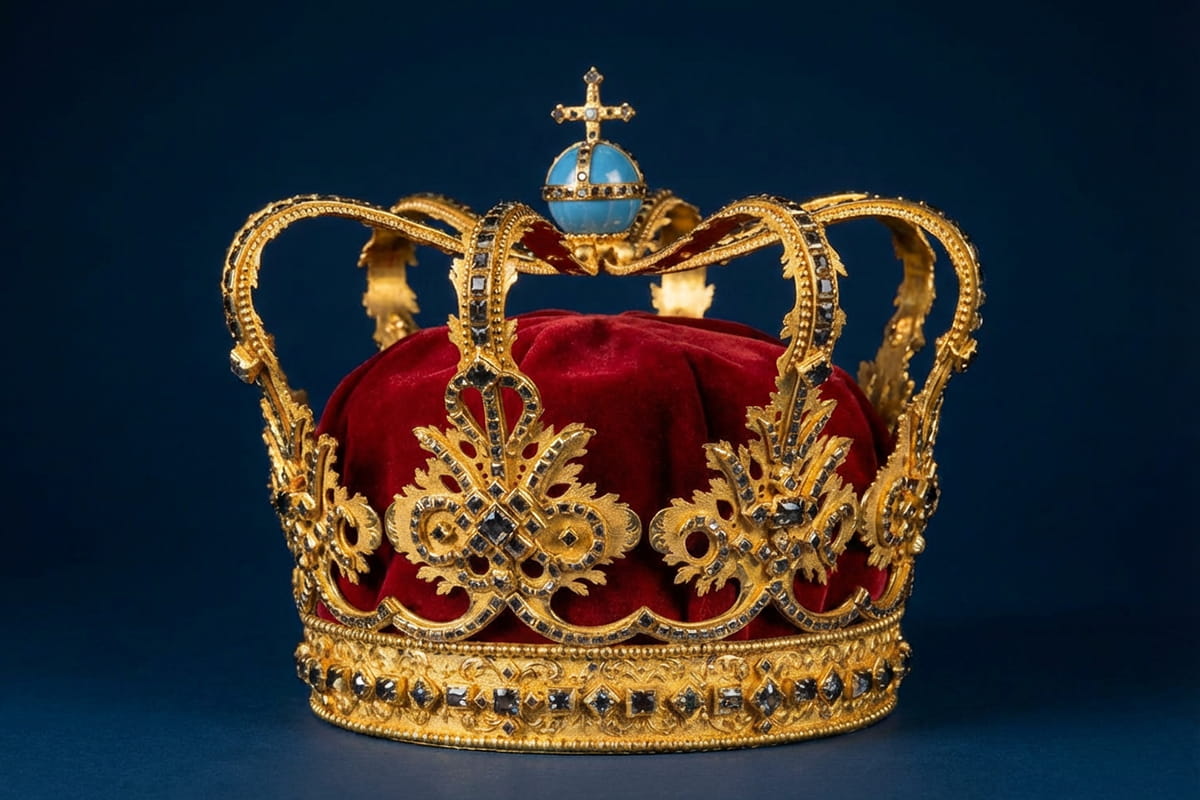
When visitors step into the darkened vaults of the Royal Treasury, the immediate sensation is one of awe. While the heavy gold and emeralds of the King’s regalia often command the initial attention, there is a piece nearby that captures the light—and the imagination—in a completely different way. The Crown of Queen Sophie Magdalene is not merely a symbol of status; it is a testament to the exquisite artistic refinement of the 18th century. Unlike the imposing weight of earlier regalia, this piece feels like a breath of light, crafted to shimmer with every subtle movement.
Commissioned in 1731, this slender, diamond-encrusted masterpiece tells a story of a queen who refused to settle for the outdated fashion of her predecessors. It represents a shift in court culture, moving away from heavy Renaissance aesthetics toward a more delicate, light-filled era. For travelers and history enthusiasts alike, standing before this crown is the closest one can get to witnessing the sheer opulence of the Danish court at its artistic peak.
The Vision of Frederik Fabritius
The creation of this regalia was entrusted to the renowned court jeweler, Frederik Fabritius. His task was not simple: he had to create a piece that projected majesty without the overwhelming bulk associated with traditional crowns. Fabritius utilized the crown jewels of Queen Sophie Amalie to fashion this new piece, effectively recycling history into a modern marvel of the time. The result was a slender hoop of gold, almost entirely hidden beneath rows of brilliant-cut diamonds.
Fabritius understood that the power of this crown lay not in the gold, but in the stones. The design allows light to pass through the gems, maximizing their brilliance. This was a significant leap in jewelry design, prioritizing the 'fire' of the diamonds over the metal setting. When you visit the Crown Jewels & Regalia collection, take a moment to observe how the light dances across the arches. It is a masterclass in 18th-century craftsmanship, where the jeweler’s hand becomes invisible, leaving only the radiance of the gems.
A Study in Contrast: Absolute Power vs. Artistic Refinement
To truly appreciate Queen Sophie Magdalene’s crown, one must view it in context with the Crown of Christian V. The King’s crown is the ultimate symbol of absolute power—closed, heavy, and dominating. It was designed to assert authority and the divine right of kings. In stark contrast, the Queen’s crown speaks a different language. It is open, airy, and undeniably feminine, yet it commands respect through its sheer beauty rather than its weight.
This contrast highlights the dual nature of the monarchy during that era:
- The King's Crown: Represents the weight of the state, the church, and absolute rule. It is static and imposing.
- The Queen's Crown: Represents cultural sophistication, fashion, and the court's connection to broader European artistic trends. It is dynamic and sparkling.
While the King's crown was used for the act of anointing, symbolizing a God-given burden, the Queen's crown was worn to beautify the realm. It is a piece of jewelry as much as it is a symbol of sovereignty. Those interested in the deeper narratives of these objects should explore the History section to understand the political landscape of 1731.
To further understand the historical context, consider researching the influence of the Rococo period on Danish courtly life during Sophie Magdalene's time. This era, characterized by its elegance and ornamentation, deeply impacted the design and perception of royal symbols like the crown.
The Crown’s Journey Through Generations
Although it was created for Sophie Magdalene because she refused to wear the crown of her predecessor, this piece of regalia did not end its journey with her. It became the preferred crown for subsequent queens, illustrating its timeless appeal. Its elegance allowed it to transcend the rapidly changing fashions of the 18th and 19th centuries. It was not just a personal accessory; it became a dynastic heirloom that connected generations of Danish queens.
However, as the era of absolutism waned, the use of crowns shifted from active wear to symbolic display. Today, the crown sits in the Royal Treasury, not as a forgotten relic, but as a preserved moment of glory. It rests safely behind glass, protected yet accessible to the public. Seeing it in person offers a tangible link to the queens who once walked the halls of the palaces, their paths illuminated by the very diamonds you see today.
Inside the Royal Treasury: A Visitor's Experience
Descending into the treasury is an experience designed to heighten anticipation. The thick walls and heavy doors remind you that you are entering a secure vault. As your eyes adjust to the dim lighting, the showcases begin to glow. The curators have expertly lit the Crown of Queen Sophie Magdalene to ensure that the diamonds catch every angle of light. It is arguably the highlight of the Rooms & Highlights tour in the basement.
When viewing the crown, pay close attention to the blue enamel and the table-cut diamonds on the palmettes. These details are often missed in photographs but are mesmerizing in person. The setting is intimate, allowing you to get quite close to the glass. It is a rare opportunity to see such wealth and artistry just inches away from your face.
Key Specifications of the Crown
| Feature | Detail |
| Creator | Frederik Fabritius |
| Year of Creation | 1731 |
| Primary Materials | Gold, Enamel, Diamonds |
| Style | Late Baroque / Early Rococo |
| Location | The Royal Treasury (Rosenborg) |
Practical Information for Your Visit
Planning a trip to see such significant historical artifacts requires a little preparation to make the most of your day. The castle and treasury are located centrally, making them an easy addition to any Copenhagen itinerary. Before you arrive, it is wise to check the Plan Your Visit page for current opening hours, as these can vary by season.
Accessibility and Comfort
The Royal Treasury is located in the basement of the castle. While the castle is historic, efforts have been made to accommodate all guests. However, due to the nature of the building, there are specific guidelines regarding access. We recommend reviewing the Accessibility page if you have mobility concerns. Additionally, for answers to common questions about photography, bag storage, and guided tours, the Frequently Asked Questions section is an invaluable resource.
Extending Your Tour
After you have been dazzled by the diamonds in the dark vaults, stepping out into the fresh air is a lovely contrast. The castle is situated within a beautiful park setting. A stroll through The King's Garden is the perfect way to reflect on the history you’ve just witnessed. The manicured lawns and historic avenues provide a relaxing end to a day filled with royal grandeur.
The Crown of Queen Sophie Magdalene is more than just an object; it is a narrative of art, power, and the personal taste of a queen who wanted to shine. Whether you are a jewelry aficionado or a history buff, this masterpiece of diamonds awaits your discovery.