
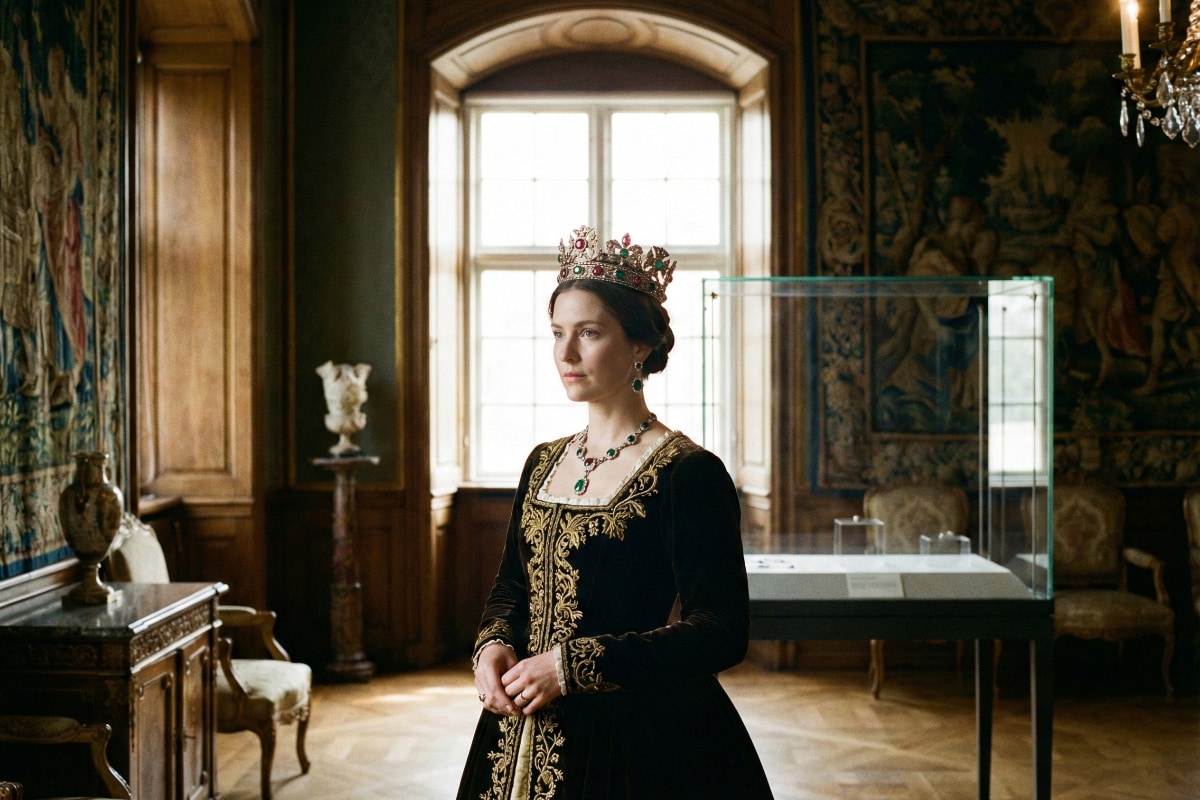
In most corners of the world, royal regalia and priceless gemstone collections are destined for a life of static display. They rest on velvet cushions, illuminated by fiber optics, separated from the public—and their royal owners—by inches of bulletproof glass. However, in Denmark, history refuses to stay locked away. If you visit Copenhagen, you aren't just looking at artifacts of a bygone era; you are witnessing a living, breathing tradition where the glittering contents of the Treasury are still actively used by the Danish Royal Family.
It is a phenomenon that surprises many visitors. You might stand before a display case in the morning, admiring an emerald parure, only to see those very same stones sparkling around the neck of Queen Mary at a New Year’s gala that evening. This seamless transition from museum exhibit to royal accessory is unique to Denmark, governed by centuries-old wills, strict police protocols, and a deep respect for heritage. For travelers planning to plan your visit to Rosenborg Castle, understanding this dynamic adds a thrilling layer of context to the experience.
A Living Treasure Chest: The History Behind the Tradition
The story of why these jewels remain in circulation dates back to 1746. Queen Sophie Magdalene, in her last will and testament, established that her jewelry should not pass to a single person but should remain with the Crown. This ensured that the collection would always be at the disposal of the sitting Queen but could never be sold, divided, or taken out of the country. This legal framework created a fascinating duality: the jewels belong to the state, yet they are the personal adornments of the monarchy.
This tradition distinguishes the Crown Jewels & Regalia of Denmark from almost every other royal collection in Europe. While the British Crown Jewels remain in the Tower of London except for coronations, the Danish sets travel short distances frequently. They are exclusively reserved for the Queen (currently Queen Mary) and are worn during four specific types of events: the New Year’s Banquet, state visits, special family events, and other high-profile royal galas. When you explore the history of Rosenborg, you realize these items are not just symbols of power, but active participants in modern diplomacy.
Strict Protocols and High Security
Moving priceless diamonds and emeralds from a secure basement treasury to a royal palace is a logistical ballet involving high security and precise timing. The jewels are stored in the basement of Rosenborg Castle, which functions as a museum during the day. When the Queen requires a specific set for an evening event, a meticulous process begins. It is not as simple as a royal aide picking up a box; the transfer involves the Royal Jeweler and a heavy police escort.
The security measures are understandably classified, but the general protocol is known. The Royal Jeweler retrieves the requested pieces, often cleaning and meticulously documenting their condition before removal. This documentation serves as a crucial record, ensuring accountability and preserving the integrity of the historical artifacts. They are then transported, usually under armed guard, to Amalienborg Palace in unmarked vehicles, with routes carefully planned and often varied to avoid predictability. Interestingly, there is one golden rule that can never be broken: the Crown Jewels must never leave Danish soil. Consequently, if the Royal Couple travels abroad for a state visit, these specific sets stay behind, and the Queen will wear other private jewelry instead.
The Four Main Sets: A Guide for Visitors
When you descend into the Treasury at Rosenborg, you will primarily encounter four major sets of jewelry, known as parures. Each has a distinct character and history. Understanding what you are looking at—or what might be missing if there is a gala—enhances the visit significantly. Here is a breakdown of the masterpieces you can expect to see:
| The Set (Parure) | Key Gemstones | Historical Significance |
| The Emerald Set | 67 emeralds and 2,650 diamonds | Originally created for Queen Caroline Amalie in 1840. The emeralds are among the finest in the world. |
| The Pearl and Ruby Set | Large pearls, rubies, and diamonds | Made in 1840. This set is a favorite for its romantic and classic appearance. |
| The Brilliant Set | Brilliant-cut diamonds | Created from older jewelry belonging to Queen Sophie Magdalene. It includes a heavy necklace of seven rows of diamonds. |
| The Rose-Cut Diamond Set | Rose-cut diamonds | These stones date back to the 18th century and offer a softer, vintage sparkle compared to modern cuts. |
The Visitor Experience: What Happens When They Are Gone?
One of the most frequently asked questions in our Frequently Asked Questions section is: "What happens if I visit on the day of a Royal Gala?" It is a valid concern. Since the jewels are in active use, there are rare occasions when a display case in the Treasury stands empty. However, the museum does not hide this fact. Instead, a small sign is placed in the empty vitrine, explaining that the jewelry is currently being worn by Her Majesty the Queen.
Far from being a disappointment, many visitors find this incredibly exciting. Seeing the empty spot serves as a tangible reminder of the monarchy's continuity. It connects the stone-cold basement of the castle with the warm, vibrant life of the current royal court. Of course, the Treasury contains much more than just these four sets. The Rooms & Highlights of Rosenborg include coronation chairs, silver lions, and weapons, ensuring that even if one necklace is "out on the town," the experience remains rich and fulfilling.
Experience the sparkle for yourself. Secure your entry to Rosenborg Castle and the Treasury today to avoid long queues.
Beyond the Treasury: Exploring the Castle Grounds
While the Crown Jewels are the undisputed stars of the Treasury, the context in which they reside is equally majestic. Rosenborg Castle itself is a masterpiece of Renaissance architecture. After viewing the glittering collection underground, visitors naturally flow upwards through the royal chambers or outwards into the greenery. A stroll through The King's Garden (Kongens Have) offers a perfect reflective space to digest the grandeur you have just witnessed. It is the oldest royal garden in Denmark and provides a stunning backdrop for photos of the castle towers.
For those requiring assistance, the castle has made strides in improving access, though the historic nature of the building presents some challenges. We recommend checking our Accessibility page to understand the layout of the Treasury and the castle floors before your arrival. The Treasury is generally more accessible than the upper towers, ensuring that the jewels can be admired by almost everyone.
A Tradition Etched in Brilliance
The Danish Crown Jewels represent more than just wealth or status; they are a testament to a monarchy that honors its past while living in the present. The unique tradition of moving these pieces "beyond the glass" for state occasions keeps the history of Denmark dynamic and alive. Whether you are an admirer of gemology, a history buff, or simply a traveler looking for magic, standing before these cases is an unforgettable experience.
When you look at the Emerald Set or the Brilliant Necklace, remember: you aren't just looking at a museum artifact. You are looking at the Queen's accessories, waiting for their next invitation to the ball. To ensure you get the best possible experience during your trip to Copenhagen, be sure to book your tickets in advance and step into a world where fairy tales are still very much a reality.