
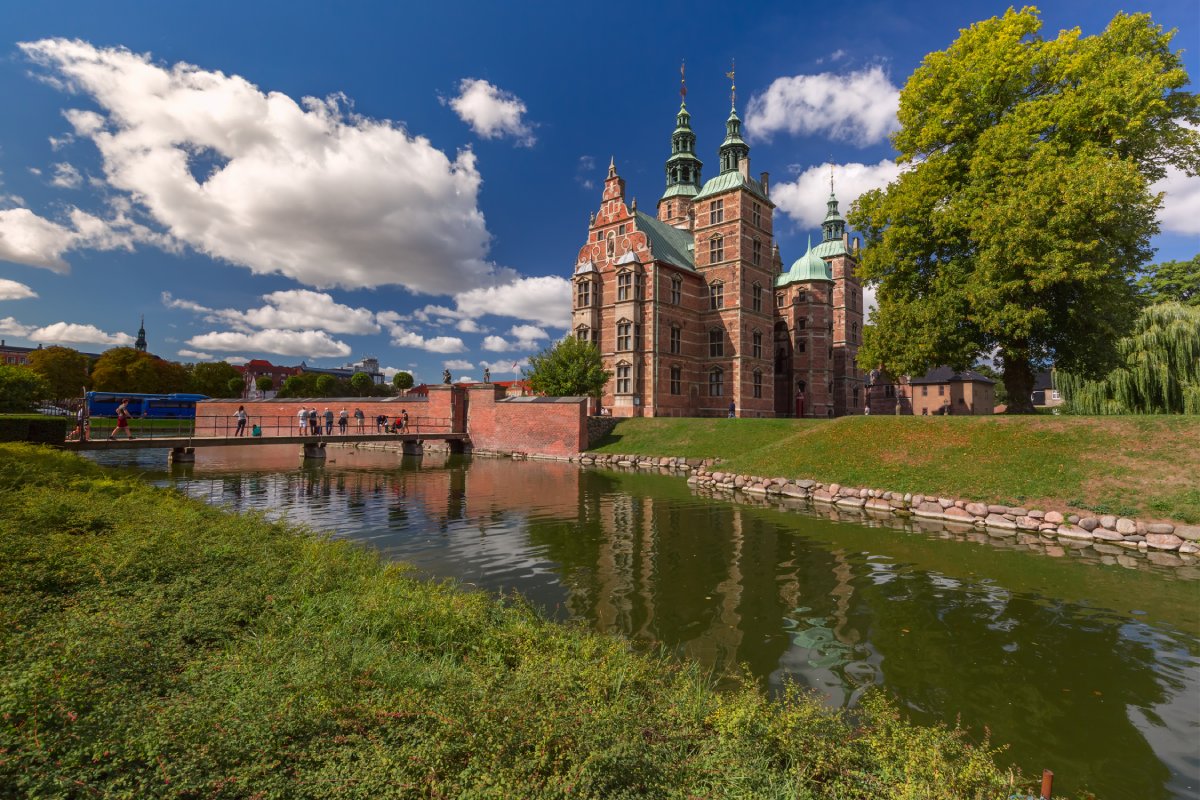
Walking toward the spires of Rosenborg Castle, it is easy to get lost in the romance of the setting. The red brick, the ornate sandstone, and the towering copper roof seem timeless, as if they have stood unchanged since King Christian IV first sketched his dream summerhouse in the early 17th century. However, for the architects, conservators, and engineers responsible for its care, the castle is a living entity that fights a constant battle against the elements, gravity, and the passage of time. Maintaining a Renaissance masterpiece in the modern era is not just about cleaning; it is a complex intersection of chemistry, structural engineering, and historical detective work.
As we navigate through December 2025, the challenges of preservation have never been more nuanced. The task requires a delicate balance: how do we protect the fragile original materials while keeping the doors open to thousands of history enthusiasts every year? It is a question that defines the daily operations at Rosenborg. To truly understand the magnitude of this effort, one must look closer at the details such as the crumbling stone, the warping wood, and the invisible technologies working silently behind the scenes to keep the history of the Danish monarchy alive.
The Battle for the Sandstone: Restoring the Renaissance Face
One of the most defining features of Rosenborg is its decorative sandstone ornaments. These intricate carvings frame the windows, adorn the gables, and give the castle its distinct Renaissance flair. However, sandstone is inherently porous and susceptible to environmental decay. Over four centuries, these stones have weathered harsh Danish winters, industrial pollution from the 19th and 20th centuries, and the natural erosion caused by wind and rain.
Conservation experts today face a difficult choice when dealing with these ornaments: replace or restore? The philosophy has shifted significantly in recent decades. In the past, worn stones were often swapped out for new replicas. Today, the goal is to conserve as much original material as possible. This involves advanced consolidation techniques where strengthening agents are injected into the stone to bond the crumbling grains without sealing the surface as the stone must still be able to "breathe" to prevent moisture buildup.
- Laser Cleaning: To remove black crusts of pollution without damaging the patina, conservators often use precision lasers that vaporize dirt but leave the stone intact.
- Poultice Application: For deep-seated salts that cause the stone to crack, clay-like poultices are applied to draw the salts out of the masonry.
- 3D Scanning: Before any intervention, fragile ornaments are 3D scanned to create a digital archive, ensuring that if a piece is lost, an exact replica can be crafted.
The Invisible Climate: Protecting Woodwork and Interiors
Once you step inside to explore the rooms and highlights of the castle, the conservation challenge shifts from weatherproofing to climate control. The interior of Rosenborg is a treasure trove of organic materials oak paneling, intricate parquet floors, canvas tapestries, and leather wall coverings. These materials are hygroscopic, meaning they expand and contract with humidity. In a modern building, we simply turn on the HVAC system. In a historic castle, installing ductwork is impossible without destroying the very fabric of the building.
The Winter Room, with its dark, rich wood paneling, represents a specific challenge. If the relative humidity drops too low during a dry winter, the wood shrinks and cracks. If it rises too high, mold becomes a risk. The solution lies in a "passive" approach combined with high-tech monitoring. Sensors are hidden throughout the rooms, tucked behind furniture or inside moldings, constantly transmitting data to a central system. Instead of aggressive air conditioning, conservation heating is used, adjusting the temperature relative to the humidity to maintain a stable environment for the artifacts.
Comparison: 17th Century vs. 21st Century Conservation Needs
| Factor | 17th Century Reality | 21st Century Conservation Goal |
| Heating | Open fireplaces (high fluctuation, soot) | Conservation heating (stable relative humidity) |
| Lighting | Candlelight and Sunlight | UV-filtered LED and window films |
| Traffic | Royal family and servants only | Hundreds of thousands of visitors annually |
| Security | Guards and heavy doors | Digital surveillance and biometric locks |
Accessibility and the Visitor Footprint
Perhaps the greatest paradox of heritage management is that the visitors who love the castle are also the greatest threat to its physical preservation. Every footstep wears down the floors; every breath adds moisture and carbon dioxide to the air. Yet, a castle without visitors is a silent tomb. The team at Rosenborg strives to make the site accessible while mitigating damage.
For those looking to plan your visit, you might notice runners or protective coverings on certain floors. These are not just aesthetic choices; they are calculated measures to distribute weight and prevent the erosion of original wood fibers. Furthermore, ensuring accessibility in a building full of spiral staircases and narrow doorways requires creative solutions that do not alter the structural integrity of the protected monument. Portable ramps and specialized staff assistance allow more people to experience history without necessitating invasive elevators that would require cutting through 400-year-old beams.
Safeguarding the Crown Jewels
Deep within the castle lie the Crown Jewels & Regalia. While gold and diamonds are durable, the velvet and silk linings of their display cases are extremely sensitive to light. The Treasury is perhaps the most technologically advanced area of the castle. Here, the challenge is security and preservation in equal measure. The lighting you see is carefully calibrated to emit zero UV radiation, preventing the fading of textiles. The glass cases are micro-environments, sealed to prevent dust and pollutants from tarnishing the silver and gold. This allows visitors to see the regalia in their full splendor, exactly as they were meant to be seen, without exposing them to the corrosive atmosphere of the city.
The Garden Connection
Conservation does not stop at the castle walls. The building sits within The King's Garden, and the relationship between the structure and the land is critical. Changes in the water table, often influenced by garden irrigation and city drainage, can affect the castle's timber pile foundations. Monitoring wells around the castle perimeter check groundwater levels to ensure the wooden piles remain submerged. If they are exposed to oxygen, they will rot, threatening the stability of the entire castle. The manicured lawns and moats are not just for show; they are part of a hydro-geological system that keeps the castle standing.
Frequently Asked Questions About Conservation
Visitors often have questions about the scaffolding they might see or the dim lighting in certain rooms. It is all part of the process.
- Why are some rooms so dark? This is to protect light-sensitive artifacts like tapestries and watercolors from fading.
- Why is scaffolding sometimes necessary? Regular maintenance of the copper roof and sandstone requires safe access for workers.
- Can I touch the walls? We ask visitors not to, as oils from hands can degrade historic surfaces over time.
For more details on what to expect during your tour, you can check our Frequently Asked Questions page.
A Future-Proof Legacy
The work being done at Rosenborg is a testament to the dedication of modern science to honor the past. It is a never-ending cycle of monitoring, cleaning, repairing, and protecting. By combining traditional craftsmanship with cutting-edge technology, the conservation team ensures that the castle remains not just a memory in a textbook, but a tangible, explorable reality.
When you walk through the Great Hall or gaze at the Crown Jewels, remember that you are witnessing the result of tireless effort to freeze time. Your visit supports this crucial work, ensuring that Rosenborg remains safe and accessible for generations of visitors yet to come.