
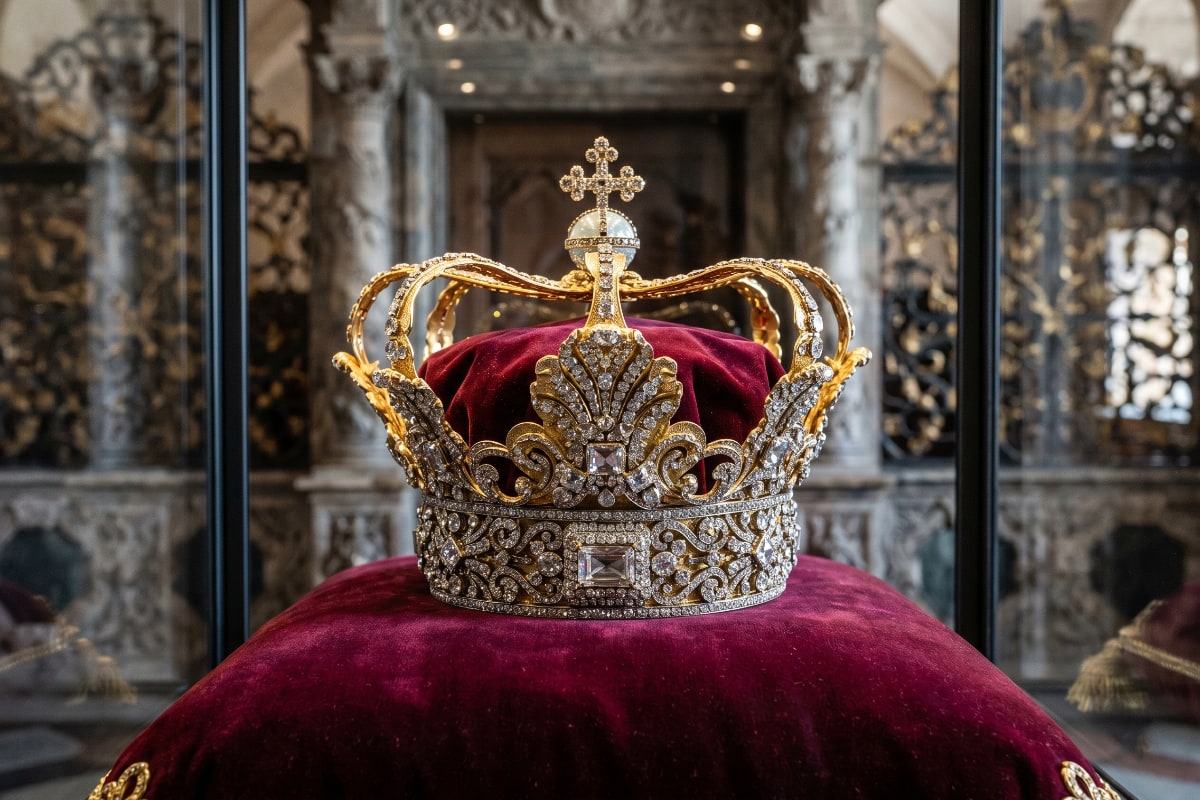
When visitors step into the dimly lit, secure vaults of the Treasury at Rosenborg Castle, there is often a collective gasp. The light catches the facets of thousands of precious stones, but one piece often steals the breath away with its sheer brilliance and artistic refinement. While the King’s crown represents absolute power with its heavy gold and closed arches, Queen Sophie Magdalene’s crown dazzles with pure elegance and distinct artistic flair. It is not merely a symbol of status; it is a testament to a queen who understood the power of beauty and the importance of legacy.
Crafted in 1731, this exquisite piece of regalia tells a story far deeper than just royal wealth. It speaks of a time when the Danish court was transforming, led by a queen who was both deeply religious and keenly aware of fashion and etiquette. As we explore the Crown Jewels & Regalia, the crown of Queen Sophie Magdalene stands out as a shining example of 18th-century goldsmithing excellence. Whether you are a history buff or a lover of fine jewelry, understanding the context of this masterpiece enriches the experience of seeing it in person.
A Masterpiece Born of Necessity and Taste
The story of this crown begins with a refusal. When Christian VI ascended to the throne, his wife, Queen Sophie Magdalene, famously refused to wear the crown of her predecessor. To her, the old regalia was associated with a court she did not wish to emulate. Consequently, she commissioned the court jeweler, Frederik Fabritius, to create a new crown specifically for her coronation in 1731.
Unlike the heavy, imposing nature of the absolute monarch’s crown, Sophie Magdalene’s commission was designed to be lighter, more graceful, and intensely sparkling. It is a piece that reflects the Rococo influence of the time—curvilinear, floral, and centered around the play of light.
The Design Philosophy: Openness vs. Power
To truly appreciate this artifact, one must understand the visual language of the era. The King's crown is a "closed" crown, featuring arches that meet at the top, surmounted by a cross and orb. This was the universal symbol of absolute monarchy—power that answers only to God, enclosing the sovereign’s authority.
In contrast, Queen Sophie Magdalene’s crown is an "open" crown. It does not have the enclosing arches of the King's regalia. Instead, it features:
- Vertical Palmettes: The structure is formed by leaf-like ornaments rising from the circlet.
- Diamond Dominance: While gold provides the structure, the visual impact comes almost entirely from diamonds.
- Velvet Cap: It traditionally holds a purple velvet cap, contrasting deeply with the white fire of the stones.
This design choice was not accidental. It allowed the Queen to appear regal and divine without visually usurping the absolute authority symbolized by her husband’s crown. It is a masterclass in balancing power with feminine elegance.
The Queen Behind the Sparkle
Who was the woman who commissioned such a treasure? Queen Sophie Magdalene of Brandenburg-Kulmbach was a complex figure in Danish history. Often described as reserved and perhaps a bit distant by her contemporaries, she was nevertheless a woman of strong will and impeccable taste.
Her relationship with the Danish people was complicated; she never fully mastered the Danish language, preferring German, which created a barrier between the throne and the populace. However, her contribution to the royal collection is undeniable. She was instrumental in establishing the concept that the Crown Jewels should remain with the Crown, rather than being divided among heirs upon a monarch's death. This decision is the very reason we can still admire these treasures in the History section of the castle today.
Technical Brilliance: A Breakdown of the Crown
For the gemology enthusiasts and those who appreciate the technical side of goldsmithing, the crown is a marvel of 18th-century engineering. The stones are set in silver to enhance their whiteness, backed by gold for structural integrity. Below is a breakdown of what makes this piece physically impressive:
| Feature | Details & Significance |
| Primary Gemstone | Diamonds (Table-cut and Rose-cut). The use of table-cut diamonds was somewhat traditional, but the sheer quantity creates a blinding shimmer. |
| Metalwork | Gold and Silver. Silver settings were standard for diamonds at the time to prevent the yellow gold from coloring the clear stones. |
| Motifs | Stylized palmettes and floral elements, moving away from heavy heraldic symbols toward aesthetic beauty. |
| Artisan | Frederik Fabritius, one of the most renowned goldsmiths of the period. |
Reading about the crown is one thing; standing inches away from it is quite another. Imagine the light dancing across the facets of the diamonds, a spectacle of royal artistry. The Crown Jewels are housed in the basement of Rosenborg Castle, a secure area that feels like entering a dragon's hoard. The lighting is deliberately kept low to protect the textiles, which has the added benefit of making the diamonds pop with incredible intensity.
When you Plan Your Visit, it is highly recommended to book your entry in advance. The Treasury is one of the most popular sections of the castle, and queues can be long, especially during peak tourist seasons. You can easily secure your spot by visiting the Book Tickets page.
Beyond the Crown: Completing the Experience
After you have spent time admiring Sophie Magdalene’s crown and the other regalia, your journey through royal history continues upstairs. The castle itself offers a chronological walk through the lives of Danish monarchs. Do not miss the Rooms & Highlights that showcase the personal living quarters of Christian VI and Sophie Magdalene, giving you a glimpse into their daily lives beyond the pomp and circumstance.
Once you exit the castle, take a moment to decompress in The King's Garden. It is the perfect place to reflect on the immense wealth and history you’ve just witnessed. The contrast between the cool, dark Treasury and the vibrant, green gardens is a hallmark of the Rosenborg experience.
Practical Tips for a Royal Day Out
To ensure your visit is as smooth as the velvet on the Queen's crown, keep these practical tips in mind:
- Photography: You are generally allowed to take photos of the Crown Jewels (without flash), so bring a camera capable of handling low-light conditions to capture the sparkle.
- Accessibility: The castle is a historic building with many stairs. For specific details regarding elevator access to the Treasury level, please review our Accessibility guide before arrival.
- Timing: As of December 2025, the best time to visit the Treasury is early in the morning or late in the afternoon to avoid the largest crowds.
- Questions: If you are unsure about bag policies or opening hours, our Frequently Asked Questions page covers almost everything you need to know.
Queen Sophie Magdalene’s crown is more than just jewelry; it is a narrative of a queen who carved out her own identity in a court dominated by absolute male power. It is a symbol of elegance that has survived centuries, waiting for you to discover its story. We look forward to welcoming you to Rosenborg to witness this dazzling piece of history firsthand.