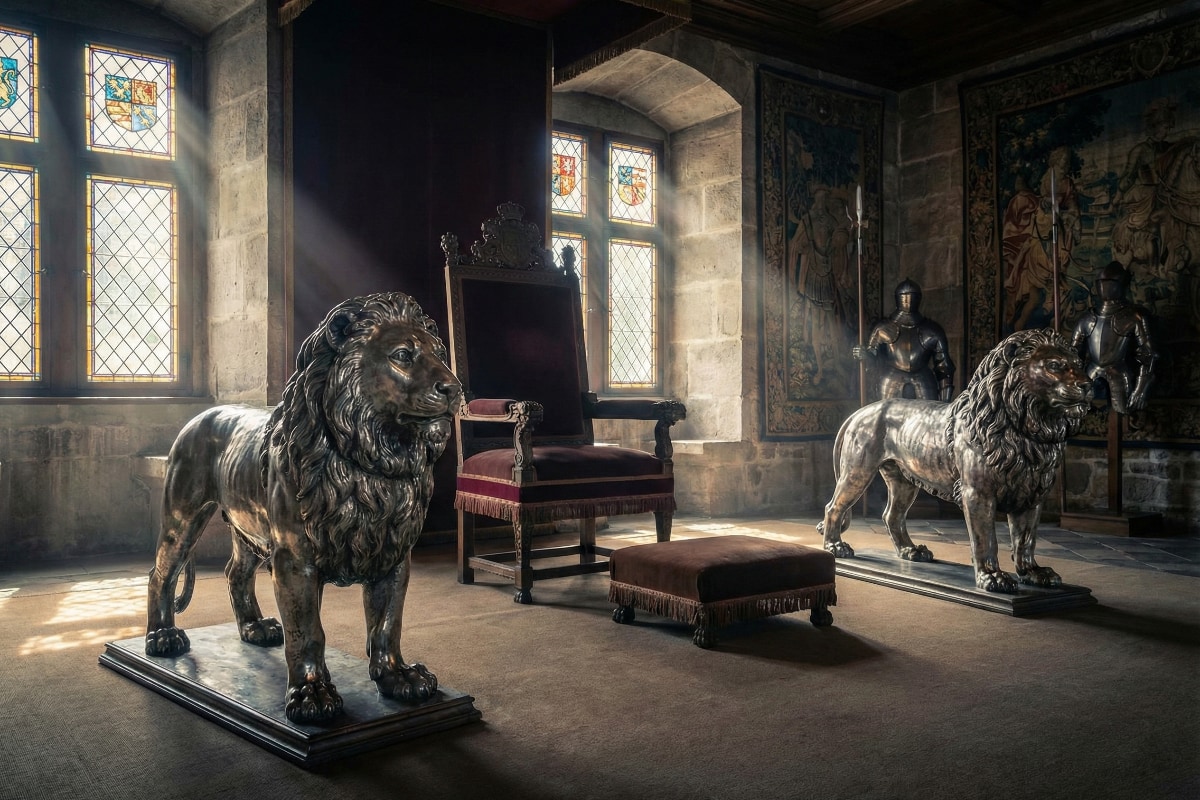
When you step into the magnificent Long Hall on the third floor of Rosenborg Castle, the atmosphere shifts instantly. The air feels heavier with history, and the light catches the shimmer of three magnificent beasts that have held their ground for centuries. These are the three life-size silver lions, the silent sentinels that have symbolically guarded the Danish kings and the coronation chair since the introduction of absolute monarchy. Standing before them is not merely an act of sightseeing; it is an encounter with the raw ambition and artistic grandeur of 17th-century Denmark. They are more than just decorative statues; they are a bold political statement cast in precious metal, designed to strike awe into the hearts of anyone who dared approach the monarch.
For travelers exploring Copenhagen, this specific installation represents the pinnacle of the castle's collection. While the Crown Jewels in the treasury below often steal the spotlight, the interplay between the silver lions and the coronation chair offers a deeper narrative about power, religion, and the sovereignty of the Danish realm. As you plan your visit to this Renaissance masterpiece, understanding the legend behind these silver giants will transform your experience from a simple walk-through into a journey through time.
The Biblical Inspiration Behind the Beasts
To understand why a Danish king would commission three life-size lions made of silver, one must look to the Bible. King Frederick III, who commissioned these figures between 1665 and 1670, was establishing himself as an absolute monarch. In doing so, he sought to draw parallels between his rule and the wisdom and power of King Solomon. According to the Old Testament, King Solomon’s throne was guarded by twelve golden lions. While the Danish treasury might not have stretched to twelve solid gold figures, three massive silver ones were a formidable alternative that conveyed the same message of divine right and unshakeable power.
These lions were originally intended to surround the king in a specific formation, creating a protective barrier that no ordinary subject could cross. This biblical reference was not subtle; it was a direct communication to the world that the Danish King was God’s representative on earth. When you explore the history of the Danish monarchy, you will see that this era defined the visual language of power, and the lions were the loudest voice in that conversation. They were designed to block the path to the throne, ensuring that the king remained untouchable and revered.
Masterpieces of Baroque Craftsmanship
The artistic craftsmanship required to create these figures is nothing short of breathtaking. Each lion weighs approximately 130 kilograms (287 lbs) and is hammered out of silver. The detail is exquisite, from the flowing manes to the tension in their muscles and the expressive, almost human-like eyes that seem to follow visitors across the room. They were crafted by Ferdinand Küblich, a master of his trade, who managed to imbue cold metal with a sense of life and movement that is rare in sculpture of this scale.
The lions are depicted in different poses, adding to their dynamic presence:
- The First Lion: Appears to be waking up or rising, alerting the others to a presence.
- The Second Lion: Sits upright in a majestic, fully alert posture, ready to defend.
- The Third Lion: Is lying down but with its head raised, representing a dormant but ever-present power.
This progression of movement suggests that the king’s power is always awake, always watching, and ready to spring into action at a moment's notice. Seeing them in person, located in the castle's Rooms & Highlights, allows you to appreciate the texture of the silver work, which has been meticulously preserved for over three centuries. Consider the techniques used: hammering the silver into shape required immense skill and patience, and the final polishing would have brought the metal to a dazzling shine, reflecting the candlelight of the Long Hall.
Symbolism of the Danish Waters
Beyond the biblical references, the three lions hold a specific geographical significance for Denmark. Legend and historical interpretation suggest that the three lions symbolize the three main waterways of the Danish kingdom: the Great Belt, the Little Belt, and the Sound (Øresund). In the 17th century, controlling these waters was the source of Denmark's wealth and political influence, primarily through the Sound Dues—a toll charged to foreign ships passing through Danish waters.
By placing these "waters" in the form of lions around his coronation chair, the King was symbolically stating his dominion over the seas. It was a message to rival nations, particularly Sweden, that the Danish monarch was the master of the gateway to the Baltic. When you stand in the Long Hall, try to imagine the geopolitical tension of the 1600s; these statues were as much a military declaration as they were art. Today, they remain a proud testament to a time when Denmark was a major naval power in Northern Europe.
| Feature | Details |
| Commissioned By | King Frederick III |
| Creation Period | 1665–1670 |
| Material | Hammered Silver |
| Location | The Knight's Hall (Long Hall), Rosenborg Castle |
| Weight | Approx. 130 kg each |
Guarding the Coronation Chair
The lions do not exist in a vacuum; their primary purpose was to guard the Coronation Chair. This chair is a spectacle in itself, made almost entirely of narwhal tusks—a material that was worth its weight in gold at the time and was often mythologized as unicorn horn. The contrast between the spiraling, ivory-white tusks of the chair and the shimmering grey of the silver lions creates a visual harmony that is incredibly striking.
Together, the chair and the lions formed the stage for the anointing of the Absolute Kings. Unlike other European monarchs who were crowned by the church, the Danish absolute kings crowned themselves. The lions were the only witnesses worthy of being in such close proximity to this divine act. If you are interested in the regalia used during these ceremonies, make sure to visit the treasury to see the Crown Jewels & Regalia after you have explored the Long Hall.
Practical Tips for Viewing the Lions
Visiting Rosenborg Castle to see these silver masterpieces requires a bit of planning to ensure the best experience. The Long Hall is located on the top floor, and while the climb is worth it, visitors with mobility issues should check the accessibility page regarding elevator access and assistance. The lighting in the hall is designed to protect the artifacts, but on a sunny day, natural light floods through the windows, making the silver lions sparkle intensely.
Because the castle can get quite crowded, especially during peak tourist seasons, it is highly recommended to secure your entry in advance. You can easily book tickets online to avoid long queues. Once inside, take your time. Many visitors rush through the rooms, but the detail on the lions' manes and claws deserves a closer look. If you have questions about photography rules or bag policies, the Frequently Asked Questions section is a great resource.
Rosenborg Castle General Information: The castle is open year-round, though hours vary by season. Consider visiting during the shoulder seasons (spring or fall) for fewer crowds and pleasant weather. Guided tours are available and offer deeper insights into the castle's history and collections. Check the official website for current opening hours, tour schedules, and special events.
Beyond the Long Hall
After you have paid your respects to the silver guardians, the experience continues outside the castle walls. The castle is situated in the heart of Copenhagen, surrounded by lush greenery. A stroll through The King's Garden (Kongens Have) offers a perfect way to reflect on the grandeur you’ve just witnessed. From the garden paths, you can look back at the castle towers and imagine the King looking out from the Long Hall, past his silver lions, over his city.
The legend of the three silver lions is a story of ambition, art, and the projection of power. They are survivors of fires, wars, and changing political tides, standing today exactly where they were meant to be. Standing before them is a privilege—a chance to look directly into the eyes of Danish history.