
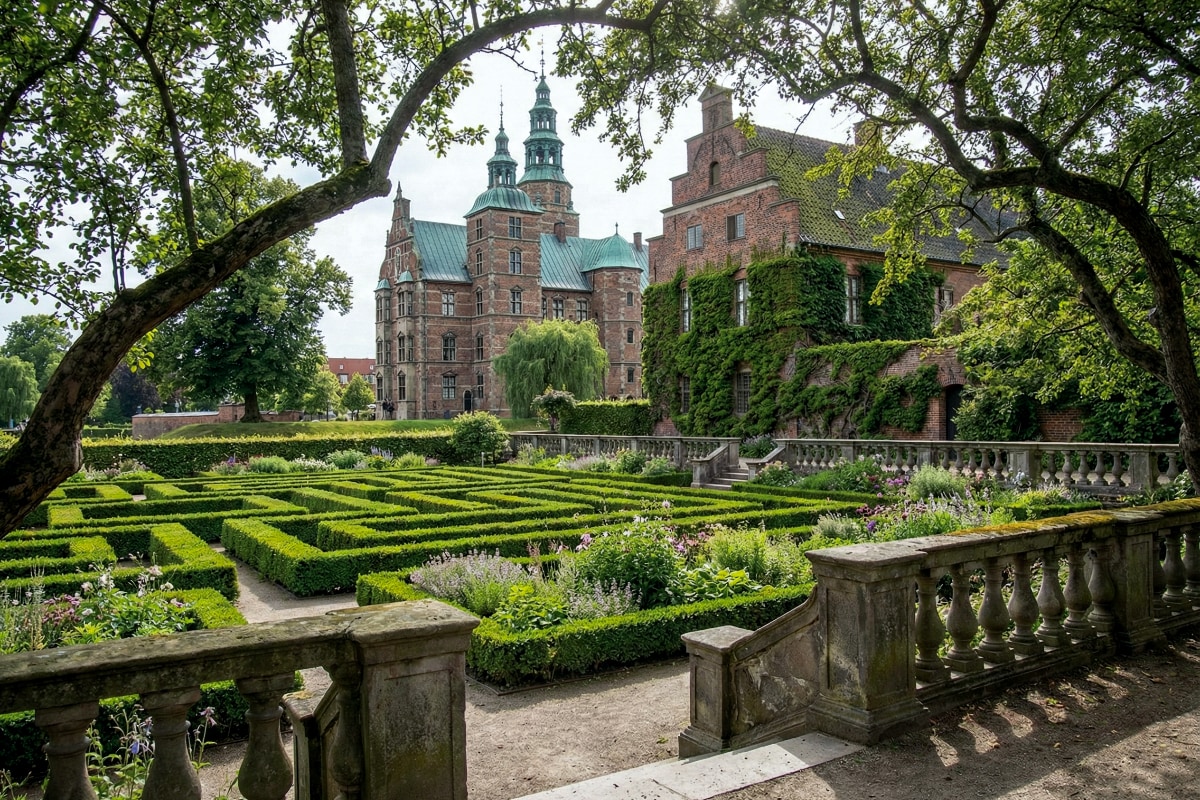
When visitors approach the majestic silhouette of Rosenborg Castle, the eye is immediately drawn to its towering spires and intricate Dutch Renaissance masonry. However, to truly understand this architectural gem, one must look away from the red bricks and down at the green earth beneath them. Unlike many royal residences where the landscape was sculpted to frame a pre-existing palace, Rosenborg tells a different story. Here, the garden came first. The castle was not merely placed in a park; it was organically grown from it, evolving from a modest summer pavilion into a grand residence dictated by the geometric lines of nature.
Walking through Copenhagen today, it is easy to take the tranquility of Kongens Have (The King's Garden) for granted. Yet, this space represents one of the most significant intersections of nature and architecture in Danish history. King Christian IV, known for his ambitious building projects, envisioned a sanctuary where the rigid structures of masonry could coexist harmoniously with the fluidity of the natural world. By exploring this symbiotic relationship, we gain a deeper appreciation for how the Renaissance and Baroque layouts of the grounds directly influenced the orientation, expansion, and ultimate form of the castle we admire today.
The Garden Came First: A Summer Pavilion’s Origins
It is a common misconception that the castle was the centerpiece around which the grounds were designed. In reality, the history of this site begins with the earth itself. In 1606, King Christian IV acquired land outside the medieval ramparts of Copenhagen with a specific vision in mind: to create a pleasure garden that would rival those of Italy and France. Before the first brick of the main castle was laid, the King was already meticulously planning the layout of his green retreat. If you are interested in the detailed timeline of these events, our History page offers a comprehensive look at the King's life and legacy.
The original structure built on these grounds was not the multi-towered palace we see now, but a modest summer house. This pavilion was intended to be a temporary resting place where the King could enjoy the fruits of his horticultural labor. The orientation of this initial structure was not arbitrary; it was aligned perfectly with the garden's planned avenues. The garden was the primary artwork, and the pavilion was merely a viewing platform. This 'Country House' eventually formed the core of the current castle, proving that the architecture was subservient to the landscape from the very beginning.
Renaissance Geometry and Baroque Flair
The layout of The King's Garden was heavily influenced by the Renaissance ideals of symmetry, order, and proportion. The garden was divided into a grid system, a checkerboard of nature that demanded a structural counterpart that adhered to the same rigorous logic. The paths were designed to draw the eye toward specific focal points, creating a visual dialogue between the observer and the environment. This geometric precision meant that when the King decided to expand his summer pavilion into a proper residence, the new wings and towers had to respect the existing lines of the garden.
As the garden evolved, incorporating Baroque elements such as the Krumspringet (a formal garden section) and the Hercules Pavilion, the castle had to adapt. The building's expansion was linear, stretching out to maximize the views of the meticulously planted flowerbeds and tree-lined avenues. The architects could not simply build outward in any direction; they were constrained and guided by the living walls of the linden trees and the carefully plotted paths. This resulted in a building that feels unusually narrow but exceptionally long, a direct physical response to the garden's Renaissance grid.
Architectural Evolution: How the Park Shaped the Palace
The symbiosis between the masonry and the nature surrounding it is evident in how the castle captures light. Because the building was oriented to align with the garden's axis, the interiors are flooded with natural light, a luxury in the 17th century. The expansion of Rosenborg happened in phases, each phase carefully calibrated to enhance the relationship with the outdoors. The addition of the great tower and the subsequent wings were not just for increased living space; they were strategic vantage points designed to oversee the geometric perfection of the grounds.
To understand the timeline of this unique architectural evolution, it is helpful to look at how the construction of the castle trailed the development of the garden:
| Time Period | Garden Development | Architectural Response |
| 1606 | Land acquired and the Renaissance grid layout established. | No castle yet; only the concept of a retreat. |
| 1606–1607 | Planting of the first avenues and fruit trees. | Construction of the original two-story Summer Pavilion. |
| 1613–1615 | Expansion of formal flower beds and decorative features. | The pavilion is expanded; a third story and a tower are added to improve views. |
| 1624–1634 | Introduction of Baroque elements and sculptures. | Final expansion to the current Dutch Renaissance style with three towers. |
This table clearly illustrates that the masonry was always playing catch-up to nature. The King's ambition for the garden drove the need for a grander building to match it. Today, when you Plan Your Visit, you can see this relationship firsthand. The windows of the Long Hall, for instance, serve as frames for the living art outside, blurring the boundary between the interior pomp and the exterior flora.
❗️❗️ DON'T MISS OUT ON HISTORY ❗️❗️
Rosenborg Castle is one of Copenhagen's most popular attractions. Lines can get long, especially during peak seasons.
Secure your entry now and skip the ticket queue!
Exploring Kongens Have Today
Today, The King's Garden serves as the green lungs of Copenhagen, a beloved public park that retains its royal dignity. While the layout has seen changes over four centuries, the essential Renaissance character remains. The Hercules Pavilion and the famous statue of Hans Christian Andersen are just a few of the highlights that dot the landscape. For modern visitors, the garden offers a unique duality: it is a place of relaxation for locals and a historical document for tourists. The geometric paths that once guided the King's footsteps now guide millions of visitors toward the castle entrance.
When you walk down the Damegangen (The Ladies' Walk), try to imagine the castle not as a fortress, but as the garden's crowning ornament. The intricate copper roof and the red brickwork were designed to contrast beautifully with the changing seasons of the park—vibrant green in summer, golden in autumn, and starkly beautiful against the white snow of winter. If you are visiting in December 2025, the stark branches of the lime trees reveal the architectural lines of the castle even more clearly, showcasing the structural symbiosis that Christian IV intended.
The Interiors Reflecting the Exteriors
The connection to nature does not stop at the front door. Inside the castle, the design continues to pay homage to the garden. Many of the Rooms & Highlights feature floral motifs in the stucco ceilings, tapestries, and furniture, bringing the garden inside. The famous Flora Danica dinner service, although from a later period, perfectly encapsulates this Danish obsession with botanical beauty that started right here at Rosenborg. Furthermore, the placement of the Crown Jewels & Regalia in the treasury beneath the castle feels like a seed buried in the earth, the opulent roots of the royal family deep within the garden's soil.
- The Winter Room: Features paneled walls that were designed to keep the warmth in while offering views of the snow-covered garden.
- The Long Hall: Its three large silver lions guard the throne, but the true spectacle is the row of windows overlooking the tree-lined avenues.
- The Writing Room: Where Christian IV would sit, directly connected to the pulse of his beloved garden.
Practical Information for Your Visit
Understanding the symbiotic design of Rosenborg enhances the visitor experience significantly. Instead of rushing straight to the treasury, take a moment to walk the perimeter. Observe how the towers align with the garden paths. Notice how the building seems to stretch out to embrace the park. For those with mobility issues, we recommend checking our Accessibility page to find the best routes through the gravel paths of the garden and into the castle.
Whether you are an architecture buff, a history enthusiast, or simply a lover of beautiful landscapes, Rosenborg offers a unique lesson in design. It teaches us that sometimes, the most magnificent buildings are those that listen to the land they stand on. If you have more questions about logistics, our Frequently Asked Questions section is a great resource to ensure your trip goes smoothly.