
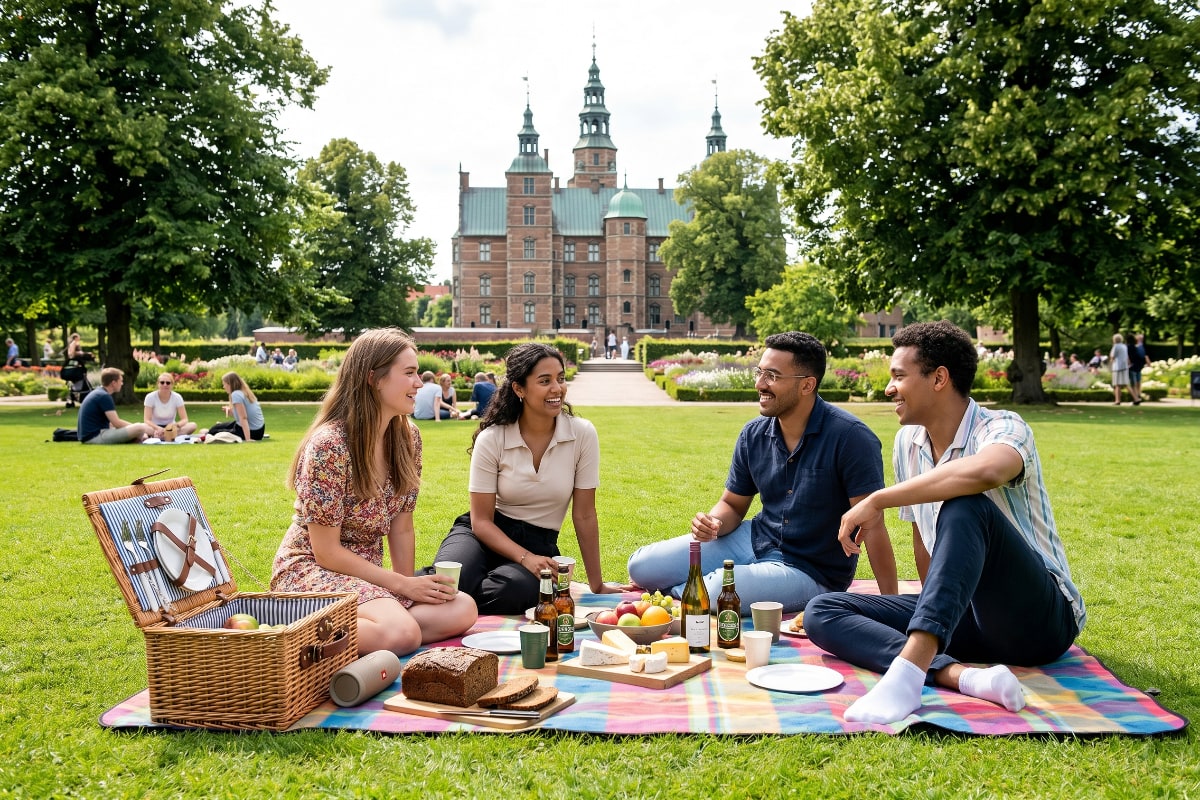
There is a specific moment when Copenhagen truly wakes up. It isn’t necessarily defined by the clock, but by the weather. As soon as the sun breaks through the clouds and the temperature rises just enough to abandon heavy coats, the city undergoes a transformation. Bicycles suddenly carry more than just commuters; their baskets are laden with blankets, strawberries, and bottles of wine. They are all heading to one place: the King’s Garden (Kongens Have).
While there are many parks in the Danish capital, none hold the same cultural significance as this one. It is effectively the city’s collective backyard, a place where students, royalty, tourists, and locals converge to celebrate the simple act of being outdoors. To truly experience the Danish concept of hygge in a public setting, you must join the locals here. However, navigating the oldest royal garden in Denmark requires a bit of insider knowledge. From selecting the prime patch of grass to understanding the unwritten rules of the lawn, here is how to elevate your picnic experience.
The Heart of Copenhagen: Kongens Have
Established in the early 17th century by Christian IV, the King’s Garden was originally a private pleasure garden for the royal family. Today, it stands as a testament to the city's democratic approach to public space. While the manicured flowerbeds and the Renaissance architecture of Rosenborg Castle provide a regal backdrop, the atmosphere is refreshingly relaxed.
Before you settle down, take a moment to appreciate where you are. You are resting on grounds that have witnessed centuries of Danish history. If you are curious about the origins of the intricate layouts and the statues watching over your lunch, you can read more about the history of the grounds before you arrive. The garden is not just a park; it is a living piece of heritage that invites you to touch the grass.
Finding Your Perfect Patch of Green
At first glance, the King's Garden might look like one giant expanse of green, but to a local, there are distinct zones, each with its own vibe. Choosing where to spread your blanket dictates the kind of afternoon you will have.
- The Social Center: The large lawns directly facing the castle are the most popular. This is where the energy is highest, often filled with groups of friends playing Kubb (a popular lawn game), music drifting through the air, and a vibrant crowd. If you want to people-watch, this is the spot.
- The Shade Seekers: Flanking the central path (the Kavalergangen), the majestic lime trees offer dappled shade. This area is perfect for those who want to escape the direct sun while still being close to the action. It is often favored by readers and couples.
- The Rose Garden Quietude: For a more serene experience, head towards the areas near the Hercules Pavilion or the Rose Garden. Here, the noise of the city fades away, allowing for quiet conversation amidst blooming flowers. Consider the area near the statue of Hans Christian Andersen for a touch of literary inspiration.
- The Periphery: For a more secluded experience, explore the edges of the garden, closer to the surrounding streets. These spots offer a quieter atmosphere, perfect for those seeking solitude or a more intimate gathering.
Curating the Perfect Danish Picnic Basket
You cannot picnic like a local with just a sandwich. The Danish picnic is a culinary event, often involving a spread of open-faced sandwiches (smørrebrød), fresh fruit, and local beverages. You don't need to cook; Copenhagen’s delis make it easy to assemble a feast.
Start by visiting the nearby food markets or bakeries. Torvehallerne, located just a short walk from the garden, is a treasure trove for picnic supplies. Look for fresh rye bread, a selection of cheeses (like Vesterhavsost), and perhaps some frikadeller (Danish meatballs). In the summer months, a punnet of Danish strawberries is non-negotiable—they are famously sweet and a staple of garden lounging.
Beyond the classics, consider adding some *kartoffelsalat* (potato salad) or *agurkesalat* (cucumber salad) for a refreshing side. For a sweet treat, look for *hindbærsnitter* (raspberry slices) or *kanelsnegle* (cinnamon rolls) at a local bakery. These pastries are perfect for ending your picnic on a sweet note.
What to Drink?
In Denmark, enjoying a beer or a glass of wine in public parks is perfectly legal and socially acceptable. You will see locals clinking glasses of chilled rosé or cracking open craft beers. Just remember to bring a bottle opener; it is the most commonly forgotten item!
If you're not a fan of alcohol, try a refreshing *hyldeblomstsaft* (elderflower cordial) or a bottle of *vand med brus* (sparkling water) with a slice of lemon. These are popular non-alcoholic choices that perfectly complement a summer picnic.
Garden Etiquette: How to Blend In
While the atmosphere is laid-back, the Danes are sticklers for mutual respect and shared responsibility. To ensure you look like a local and not a chaotic tourist, keep these etiquette tips in mind:
- Respect the invisible lines: While you can sit on the grass, avoid setting up camp in the middle of the main gravel paths. These are thoroughfares for pedestrians and cyclists walking their bikes.
- Leave no trace: This is the golden rule. Copenhagen takes pride in its cleanliness. When you leave, your spot should look exactly as it did when you arrived. There are numerous trash and recycling bins around the perimeter. Use them.
- BBQ Rules: Disposable grills are a common sight in Danish parks, but in historic gardens like this, there are often restrictions to protect the grass and trees. Always check the signs or our Frequently Asked Questions to see if grilling is permitted during your visit.
- Keep it contained: Music is welcome, but keep the volume at a level that doesn't disturb the group next to you. The garden is shared by sunbathers, napping toddlers, and readers alike.
From Grass to Gold: Visiting the Castle
One of the unique aspects of picnicking here is the looming presence of Rosenborg Castle. It is quite surreal to eat strawberries while staring at a 400-year-old royal residence. Many visitors make the mistake of only staying in the garden. However, the true magic lies in combining the exterior leisure with the interior grandeur.
After you have enjoyed your lunch, pack up your basket and head inside. The transition from the sunny, democratic lawns to the opulent rooms and highlights of the castle is striking. Inside, you can see the pomp and circumstance that the garden was originally built to complement. Don't miss the basement treasury, where the shimmering Crown Jewels & Regalia are kept—a stark contrast to the simple pleasures of a picnic.
❗️❗️ DON'T MISS OUT! ❗️❗️
Rosenborg Castle is one of Copenhagen's most popular attractions. Entry slots fill up incredibly fast, especially on sunny days when the garden is full.
Practical Information for Your Visit
To help you plan your day seamlessly, here are some practical details regarding the garden facilities. Note that while the garden is open to the public free of charge, the castle requires a ticket.
| Feature | Details |
| Restrooms | Public toilets are available near the entrance by the Hercules Pavilion. |
| Accessibility | The main paths are wide and gravel-paved, suitable for most wheelchairs and strollers. See our accessibility page for more info. |
| Opening Hours | The garden opens at 07:00. Closing times vary by season (sunset). |
| Café | There is a seasonal café in the garden, but bringing your own food is the local way. |
Whether you are looking to rest your legs after a day of sightseeing or want to immerse yourself in the local culture, an afternoon in the King's Garden is time well spent. It captures the essence of Copenhagen: historic yet alive, royal yet accessible. So, grab a blanket, find your spot under the lime trees, and enjoy the view.
Ready to explore the history behind the scenery? Plan your visit to Rosenborg Castle today and make your day in the King's Garden complete.