
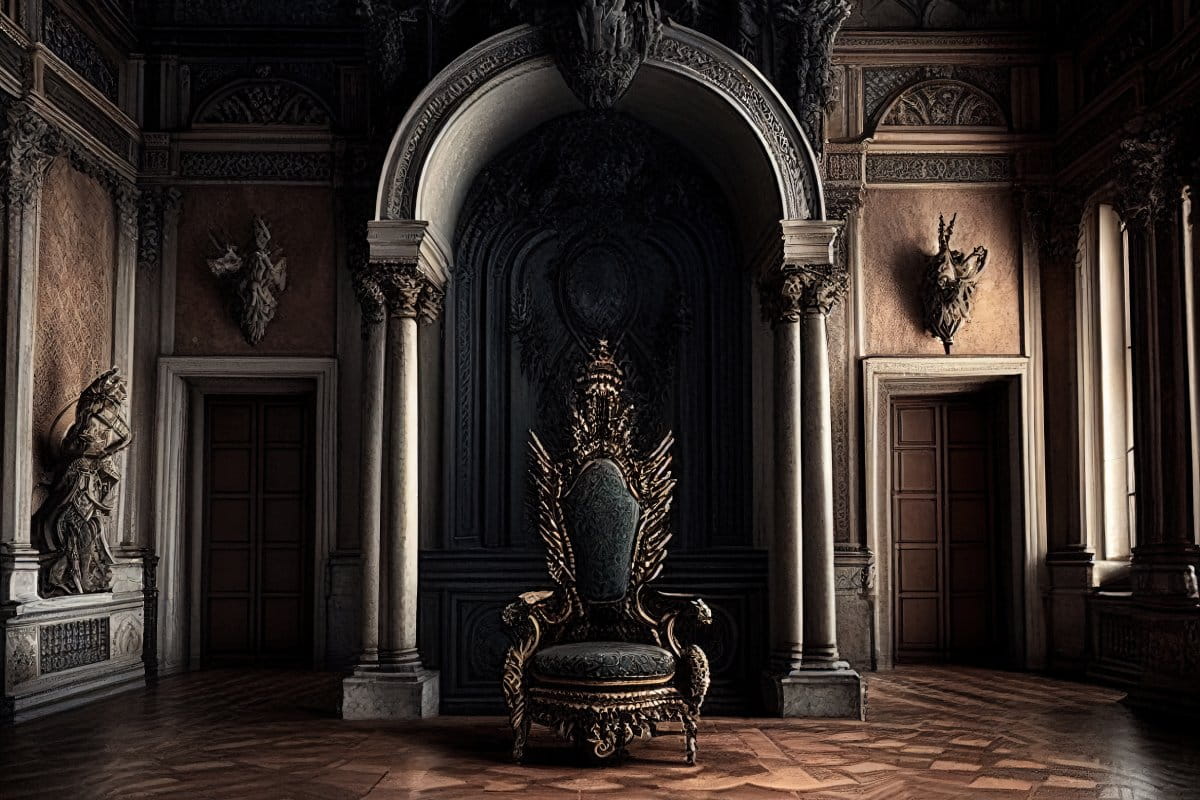
When you visit a royal residence, there is usually one room that stands above the rest—a space designed not just to impress, but to overwhelm the senses with majesty and authority. At this historic castle, that space is undoubtedly the Long Hall, now widely known as the Knights’ Hall. Located on the top floor, this architectural marvel invites visitors to step back into an era where art and politics were inextricably linked. As you ascend the winding staircases to reach this summit of the castle, the anticipation builds, but nothing quite prepares you for the sheer scale and artistic density that awaits you upon entering.
The room is a triumph of Baroque design, originally intended as a ballroom but later transformed into the ceremonial heart of the monarchy. It is here that the concept of absolute power was given physical form. From the intricate plasterwork above to the gleaming silver guardians on the floor, every inch of the Knights’ Hall was engineered to project prestige. For travelers planning their itinerary, this hall is often the highlight of the visit, offering a tangible connection to the pomp and circumstance of the past.
The Architectural Grandeur of the Long Hall
Spanning the entire length of the castle’s third floor, the Long Hall was completed in 1624. Its dimensions were deliberate; the length was designed to facilitate grand processions and court ballets, which were the height of fashion in the 17th century. The light flooding in from the windows on both sides illuminates the room’s treasures, creating a play of light and shadow that enhances the drama of the space. While the room has evolved over centuries, the fundamental spatial design remains a testament to the vision of King Christian IV.
To truly appreciate the context of this room, one must understand the history of the castle itself. It wasn't merely a home; it was a stage. The Knights’ Hall served as the backdrop for banquets, audiences, and eventually, the coronation ceremonies of absolute monarchs. The transition from a ballroom to a throne room required a setting that commanded respect, and the architectural layout directs the eye inevitably toward the far end of the hall, where the seat of power resides.
A Masterpiece Above: The Baroque Stucco Ceiling
While the treasures at eye level are captivating, the true masterpiece of the Knights’ Hall requires you to look up. The magnificent stucco ceiling is one of the finest examples of Baroque plasterwork in Northern Europe. Created in the early 18th century, this ceiling replaced an earlier version to reflect the changing tastes and political ambitions of the time. It is a sprawling canvas of white relief, featuring elaborate scrolls, floral motifs, and allegorical figures that seem to dance across the vault.
The ceiling is not merely decorative; it is a political manifesto written in stucco. Key elements include:
- The Coats of Arms: Central to the design are the Danish coat of arms, surrounded by the Order of the Elephant and the Order of the Dannebrog, symbolizing the King's sovereignty.
- Allegorical Figures: Representations of the four winds and various virtues look down upon the visitor, suggesting that the monarch’s rule is supported by divine and natural forces.
- High Relief Technique: The depth of the stucco work creates a 3D effect that changes as you move through the room, making the ceiling feel dynamic and alive.
Preserving this ceiling is a monumental task. As detailed in the Rooms & Highlights section, conservationists work tirelessly to ensure that the delicate plaster remains intact for future generations to admire. It stands as a stark contrast to the dark tapestries on the walls, drawing the gaze heavenward and emphasizing the 'divine right' of the kings who once walked these floors.
The Three Silver Lions: Guardians of the Throne
Approaching the coronation chair, your path is blocked—symbolically, at least—by three life-size silver lions. These are perhaps the most photographed and beloved objects in the entire collection. Commissioned by King Frederik III between 1665 and 1670, these glistening beasts were inspired by the biblical throne of Solomon, which was said to be guarded by lions. In the context of the Knights’ Hall, they serve a dual purpose: they are protectors of the monarchy and displays of immense wealth.
Each lion has a distinct pose, capturing a different aspect of alertness and aggression. They are not solid silver, which would be impossibly heavy, but are hammered silver plates over a wooden core—a technique that required exceptional craftsmanship. Historically, these lions were not static; they were moved to guard the King’s castrum doloris (lying-in-state) upon a monarch's death, accompanying the King from his coronation to his final rest.
The Coronation Chair and Absolute Power
At the far end of the hall stands the Coronation Chair, the ultimate symbol of the absolute monarchy introduced in Denmark in 1660. Made partly of narwhal tusk (which was believed to be unicorn horn at the time), the chair is an object of almost mythical status. It was here that the anointed Kings sat, surrounded by the Crown Jewels & Regalia, to receive the homage of their subjects.
The spatial design of the room was engineered to project absolute power. The long walk from the entrance to the throne was designed to make the visitor feel small and the monarch appear distant and majestic. To help you understand the symbolism found throughout the hall, here is a breakdown of the key elements:
| Element | Symbolic Meaning | Historical Context |
| Narwhal Tusk (Throne) | Divine selection, purity, and connection to the mythical unicorn. | Used to legitimize the King's rule as something otherworldly. |
| Silver Lions | Biblical power (King Solomon), strength, and guardianship. | Modeled after descriptions in the Old Testament to link the Danish King to biblical wisdom. |
| Amethyst (Throne Top) | Sobriety and clarity of mind for the ruler. | Placed at the very top of the coronation chair to guide the King's decisions. |
| Stucco Ceiling | The heavens watching over the monarchy. | Replaced earlier painted ceilings to provide a brighter, more 'modern' Baroque aesthetic. |
Planning Your Experience
Because the Knights’ Hall is located on the top floor, access requires navigating stairs. For visitors with mobility issues, it is essential to check the accessibility page beforehand to understand the available facilities and limitations of this historic building. The castle can get quite busy, especially during peak seasons, so reading through the Frequently Asked Questions can help you time your visit for a quieter experience.
After you have soaked in the grandeur of the Hall, the lions, and the stucco masterpiece, don't forget to step outside. A walk through The King's Garden offers a perfect reflective end to your tour, allowing you to view the castle exterior and imagine the King looking out from the very windows you just stood beside.
Final Thoughts
The Knights’ Hall is more than just a room; it is a carefully curated environment designed to tell a story of power, art, and history. Whether you are captivated by the technical skill of the stucco ceiling or the imposing presence of the silver lions, a visit here is a journey into the heart of the Danish royal heritage. As we explore these wonders in December 2025, they remain as potent and impressive as they were three centuries ago. To further enhance your experience, consider exploring the available audio guides, which provide in-depth commentary on the hall's history and significance. Additionally, check the castle's official website for upcoming events or exhibitions related to the Knights' Hall, which could offer a unique perspective on this iconic space. Imagine the hall filled with music during a royal banquet or illuminated by candlelight during a special evening tour – these are experiences that truly bring history to life.