
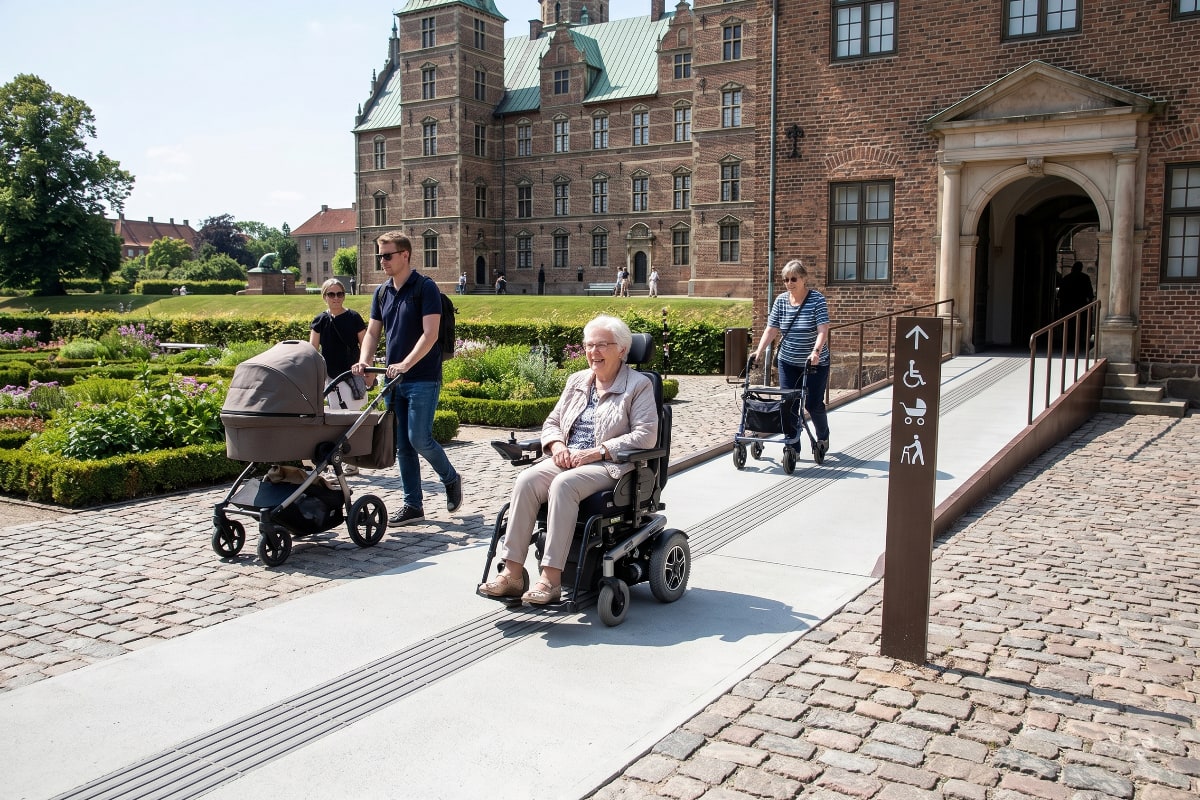
Stepping into the world of Christian IV is a magical experience, offering a glimpse into the pomp and circumstance of Renaissance Denmark. However, the very features that make Rosenborg Castle so authentically historic—its towering spires, narrow spiral staircases, and cobblestone surroundings—can present genuine logistical hurdles for modern visitors with limited mobility. When this architectural gem was constructed in the early 17th century, accessibility was simply not a concept that existed. Today, balancing the preservation of this cultural heritage with modern needs is an ongoing challenge.
If you or a travel companion requires wheelchair access or has difficulty walking long distances, a visit to Rosenborg requires a bit more strategy than the average sightseeing stop. While not every corner of the castle is accessible to everyone, with the right information, you can still enjoy the majestic highlights, including the glitter of the Crown Jewels. This guide is designed to help you manage expectations and plan a smooth, enjoyable journey through Danish history.
The Reality of Renaissance Architecture
To understand the accessibility landscape at Rosenborg, one must look at its history. Built as a summer pleasure palace between 1606 and 1633, the castle was designed for defense and grandeur, not ease of movement. The structure is vertical, relying heavily on towers containing spiral staircases to connect the floors. Unlike modern museums designed with universal access in mind, retrofitting a building of this age with elevators without destroying its structural integrity or historical value is incredibly difficult.
For visitors, this means that the upper floors—including the Great Hall with the coronation chairs and the famous silver lions—are unfortunately only accessible via stairs. There are no elevators that service the first and second floors of the castle itself. However, this does not mean a visit is impossible; it just means focusing your itinerary on the treasures that are within reach.
Wheelchair Access and Elevator Facilities
The most frequent question asked regarding accessibility at Rosenborg concerns the elevator situation. Here is the definitive breakdown of what is available:
- The Ground Floor: Access to the ground floor (where the Winter Room and Christian IV’s Bedroom are located) is possible for manual wheelchairs, though there may be small doorsteps or uneven surfaces typical of old buildings.
- The Basement (The Treasury): This is the good news. There is a lift that provides access to the basement level. This is crucial because it houses the castle’s most prized possessions: the Crown Jewels and the Regalia.
- Upper Floors: As mentioned, the first and second floors are accessible solely by spiral staircases.
It is important to note that the castle does not allow motorized wheelchairs or scooters inside due to the fragility of the interiors and the narrow width of the doorways. If you use a motorized device, you will need to transfer to a manual wheelchair. The castle has a limited number of manual wheelchairs available for loan, which can be reserved by contacting the administration prior to your visit.
The Companion Ticket Scheme
Denmark is generally very progressive regarding disability rights, and Rosenborg Castle participates in the companion scheme. If you have a disability and require an attendant to assist you during your visit, your companion can enter free of charge. You will still need to purchase your own ticket, but the person assisting you does not need to pay.
To utilize this, you generally need to show a valid companion card (from Denmark or an equivalent official document from your home country) at the ticket desk. We recommend checking the tickets page for the most current booking procedures. Even though the companion enters for free, it is often wise to ensure they are accounted for in terms of capacity slots, especially during peak tourist seasons.
What You Can See: Accessible Highlights
Even with the limitations on the upper floors, an accessible visit covers some of the most spectacular parts of the collection. You don't have to miss out on the royal splendor.
The Ground Floor Apartments
Entering the castle, you can explore the preserved rooms of Christian IV. The interiors here are dark, atmospheric, and richly decorated. You will see the King’s Winter Room, famous for its wooden paneling and embedded paintings. This area gives you a profound sense of the daily life of the monarch.
The Crown Jewels and Treasury
For many, this is the main event. Located in the secure basement, the Treasury is fully accessible via the lift. Here, you can get up close to the Crown Jewels & Regalia. The display includes the absolute finest examples of goldsmith work, sparkling diamonds, and the heavy gold crowns of absolute monarchs. Since the lighting is dim to preserve the artifacts, visibility of the sparkling gems is actually quite dramatic. Spending time here often makes up for missing the upper floors.
Navigating the King's Garden
If the castle interior proves too challenging or claustrophobic, the surrounding grounds offer a wonderful alternative. The King's Garden (Kongens Have) is Copenhagen's oldest royal garden and is generally very accessible. The paths are wide, paved or hard-packed gravel, and flat, making them suitable for wheelchairs and visitors with walking difficulties.
The gardens provide stunning exterior views of the castle—perfect for photography—and feature the Hercules Pavilion and beautiful herbaceous borders. In the summer, it is a vibrant spot full of locals picnicking, but even in the cooler months, it offers a serene, accessible stroll through history.
Practical Planning for Your Visit
To ensure your experience is as comfortable as possible, keep these logistical tips in mind when you plan your visit:
- Arrival and Parking: The castle is located in the city center. While there is no dedicated parking lot solely for the castle inside the moat, there is public parking on the surrounding streets. Be aware that the courtyard is paved with cobblestones, which can be shaky for wheelchair users.
- Restrooms: Accessible restrooms are available near the ticket office and shop area. There are also facilities in the basement of the castle near the Treasury.
- Luggage: Large bags are not permitted inside. Lockers are available, but they require a coin to operate. If you have medical equipment bags, inform the security staff upon arrival.
- Timing: The castle can get crowded. For visitors with mobility issues, trying to navigate through large tour groups can be stressful. We suggest visiting immediately upon opening or later in the afternoon for a calmer experience.
Accessibility Summary Table
To help you visualize what is possible, here is a quick reference guide:
| Area | Accessibility Status | Notes |
| The Treasury (Basement) | ✅ Accessible | Access via elevator. Houses Crown Jewels. |
| Ground Floor | ⚠️ Partially Accessible | Access for manual wheelchairs; some doorsteps. |
| Great Hall (2nd Floor) | ❌ Not Accessible | Spiral stairs only. No elevator. |
| King's Garden | ✅ Accessible | Flat, wide paths. Gravel and pavement. |
| Restrooms | ✅ Accessible | Located at entrance/shop and basement. |
Making the Most of Your Trip
While the architectural constraints of the 17th century prevent a fully barrier-free experience, Rosenborg Castle remains a welcoming destination for all history lovers. By focusing on the spectacular Treasury, the atmospheric ground floor, and the beautiful gardens, you can have a memorable day out.
If you have specific questions about dimensions for wheelchairs or current lift maintenance status, checking the Frequently Asked Questions or contacting the museum directly before your trip is always a good idea. History belongs to everyone, and with a little preparation, the glory of the Danish kings is yours to explore.