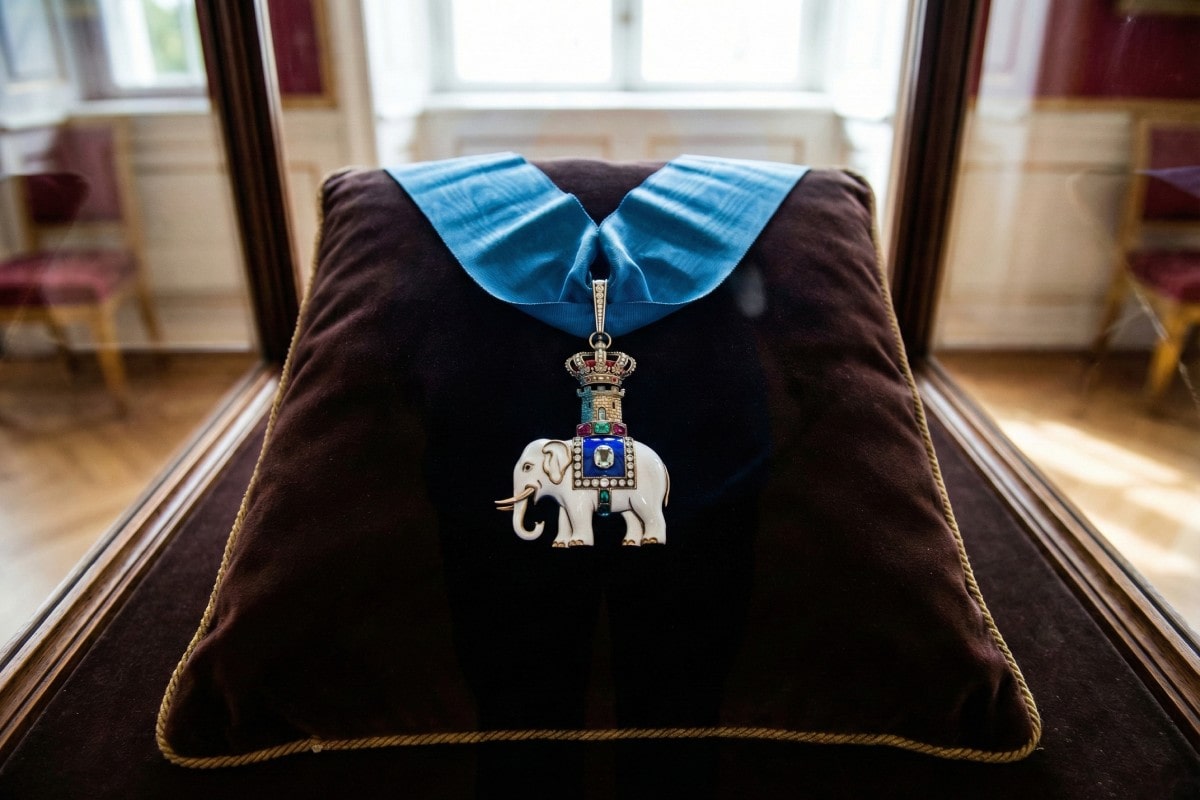
When you step into the dim, atmospheric lighting of the Treasury at Rosenborg Castle, your eyes are immediately drawn to the sparkle of diamonds, rubies, and emeralds. However, among the crowns and scepters, there is a distinct, somewhat whimsical, yet deeply powerful symbol that captures the imagination of every visitor: a small, white-enameled elephant bearing a battle tower on its back. This is the insignia of the Order of the Elephant, Denmark’s oldest and most distinguished Royal Order of Chivalry.
For travelers and history enthusiasts alike, understanding this badge is key to unlocking the narrative of the Danish monarchy. It is not merely a piece of jewelry; it is a symbol of absolute faith, strength, and an exclusive brotherhood that has existed for centuries. While you can admire the physical beauty of these items when you explore the Crown Jewels & Regalia, the story behind them is what truly brings the metal and stone to life.
A Legacy Carved in History
The origins of the Order of the Elephant are steeped in religious devotion and medieval tradition. While the exact inception is debated, it is generally traced back to the 15th century under Christian I. Originally, it had a strong Catholic connection, associated with the Fellowship of the Mother of God. However, following the Reformation, the order went dormant until it was revived in 1580 by Frederick II.
The modern form of the Order, as we recognize it today, was codified by King Christian V in 1693. He established the statutes that transformed it into a rigid, exclusive institution. Unlike other honours that might be awarded for merit in various fields, the Order of the Elephant is reserved almost exclusively for royalty and heads of state. To delve deeper into the timeline of these monarchs and their impact on Danish culture, you might want to read more about the castle’s History before your arrival.
The choice of an elephant, an animal exotic to Scandinavia symbolizes chastity and piety. In the medieval mindset, the elephant was believed to be a creature of high moral standing, making it a fitting emblem for a Christian knight. Today, it stands as a testament to the continuity of the Danish monarchy, connecting the modern era with the Renaissance.
The Badge: A Masterpiece of Craftsmanship
Among the sparkling gems of the Treasury lies the insignia of the Order of the Elephant, and the craftsmanship involved is nothing short of breathtaking. The badge itself is a three-dimensional sculpture made of gold, covered in white enamel. It is one of the few orders in the world where the badge is a 3D figure rather than a flat cross or star.
If you look closely during your visit, you will notice the intricate details that make each elephant unique:
- The Tower: On the elephant’s back sits a battle tower, often set with diamonds. This symbolizes authority, strength, and vigilance, with broader Christian associations
- The Mahout: Sitting on the neck of the elephant is a small figure, a Moor driver, sometimes holding a spear. This adds an element of exoticism and narrative to the piece.
- The Cross: On the side of the elephant, a cross formed of diamonds is usually visible, reinforcing the order's Christian roots.
- The Monogram: Under the belly or on the side, the monogram of the reigning monarch at the time of the badge's creation is often engraved.
The sheer artistry required to mold the gold and apply the enamel without cracking it demonstrates the high level of skill possessed by the royal jewelers of the past. These badges are not just symbols; they are priceless works of art.
Who Wears the Elephant?
The exclusivity of the Order of the Elephant is what maintains its mystique. There are no "applications" for this honour. It is bestowed solely at the discretion of the Monarch. Historically, it was given to foreign sovereigns and Danish nobility. In modern times, it is primarily reserved for members of the Royal Family and foreign Heads of State during state visits.
Interestingly, the insignia is not "given" permanently in the same way a gift is. It must be returned upon the death of the holder. This means that the badges you see in the Treasury have often been worn by historical giants, kings, emperors, and presidents from centuries past. This cycle of return and reissue keeps the history alive, as a single badge may have adorned the chests of multiple significant figures over hundreds of years.
The Treasury Experience at Rosenborg
Seeing the Order of the Elephant in photos is one thing; witnessing it within the fortified walls of Rosenborg Castle is another. The Treasury is located in the basement, a secure vault that houses the most valuable possessions of the Danish crown. The atmosphere is intentionally dark to protect the artifacts and to let the gold and gemstones catch the light dramatically.
When you Plan Your Visit, ensure you allocate enough time to descend into the Treasury. It is one of the key Rooms & Highlights of the entire castle complex. Here, the Elephant is displayed alongside the coronation crowns and the sword of state, contextualizing it within the full scope of royal power.
Quick Facts: The Order of the Elephant
| Feature | Details |
| Founded | 15th Century (Christian I), Statutes by Christian V (1693) |
| Insignia | White enameled elephant with a battle tower |
| Motto | Magnanimi Pretium (The Prize of Greatness) |
| Worn | On a blue sash from left shoulder to right hip |
| Special Days | Worn on collar days: New Year's Day, the Monarch's birthday, and June 28th (Valdemar's Day) |
Practical Tips for Your Royal Visit
After immersing yourself in the glitter of gold and the weight of history in the Treasury, a breath of fresh air is often welcome. We highly recommend that you take a stroll through The King's Garden (Kongens Have) surrounding the castle. It offers a beautiful perspective of the Renaissance architecture and is a perfect spot to reflect on the grandeur you’ve just witnessed.
For those traveling with mobility issues, please check our Accessibility page. While Rosenborg is a historic building with some limitations, access to the Treasury is generally possible, ensuring everyone can witness the glory of the Elephant.
The castle can get quite busy, especially during peak seasons. To ensure you don't miss out on seeing these unparalleled artifacts, it is highly advisable to Book Tickets in advance. This guarantees your entry and allows you to enjoy the collection without the stress of long queues.
Frequently Asked Questions
Here are some common queries visitors have regarding the Royal Orders and the Treasury.
- Can anyone receive the Order of the Elephant?
No. It is arguably the most exclusive order in the world, reserved for Royalty and Heads of State. - Is the badge heavy?
While it looks substantial, it is hollow gold, making it wearable, though the sash and collar add weight. - Can I take photos in the Treasury?
Yes, photography is allowed without flash. Capturing the sparkle of the Elephant badge is a highlight for many photographers.
For more detailed answers regarding logistics, cloakrooms, and photography rules, please visit our Frequently Asked Questions page.
The Order of the Elephant represents the pinnacle of Danish heritage. It is a blend of art, history, and royal tradition that continues to fascinate the world. We look forward to welcoming you to Rosenborg Castle to see this magnificent insignia with your own eyes.