
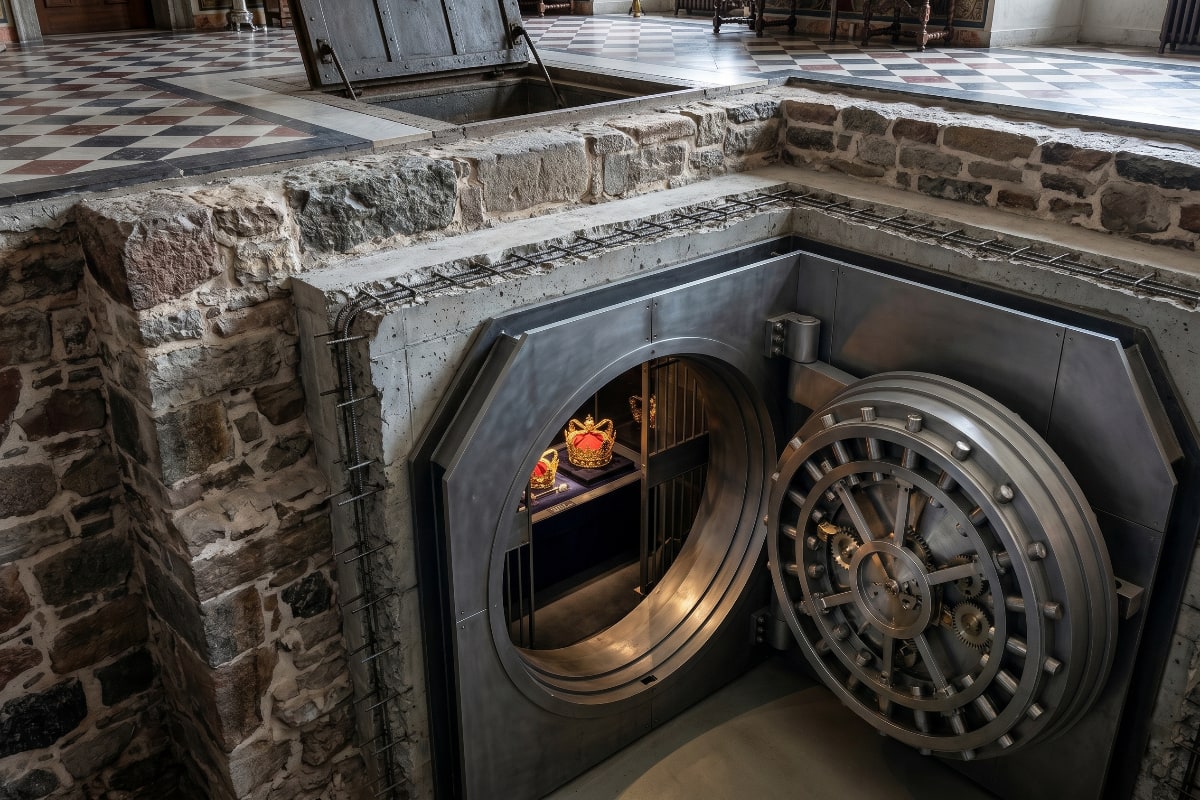
When you step through the grand entrance of Rosenborg Castle, your eyes are immediately drawn upward to the ornate ceilings and the abundance of natural light flooding the royal chambers. However, the true structural heart of this Renaissance masterpiece lies beneath your feet. To understand the castle's longevity and its role as the guardian of the monarchy’s most precious symbols, one must leave the sunlight behind and descend into the shadows.
The journey into the basement is more than just a change in elevation; it is a shift in atmosphere and purpose. Here, the air grows cooler, the sounds of the city fade into a heavy silence, and the delicate woodwork of the upper floors is replaced by the raw, imposing strength of stone. This is where the Crown Jewels & Regalia reside, protected not just by guards and glass, but by centuries-old engineering designed to withstand sieges, fires, and the ravages of time.
The Foundation of Power: Masonry and Might
The basement of Rosenborg was never originally intended to be a museum. When Christian IV planned this pleasure palace in the early 17th century, the lower levels were designed with practicality in mind. The architecture here speaks a language of utility and defense. Unlike the upper floors, which were built to impress foreign dignitaries and host lavish balls, the basement was built to endure.
As you walk through the corridors, take a moment to examine the masonry. The walls here are significantly thicker than those above, constructed from heavy brick and stone. This robust masonry serves a dual purpose: it supports the immense weight of the three stories above, and it provides a secure, temperature-controlled environment. In the 1600s, this natural insulation was crucial for the storage of the King’s wine, but today, it provides the stable conditions necessary to preserve delicate artifacts.
The Engineering of the Vaulted Ceilings
The most striking feature of the lower level is the series of vaulted ceilings. These are not merely decorative; they are a structural necessity. The barrel vaults and groin vaults distribute the weight of the castle evenly down to the foundation, creating a rigid structure capable of surviving structurally traumatic events.
- Load Distribution: The arches channel gravity’s force into the thick supporting walls, allowing for open spaces underground without the need for a forest of columns.
- Fire Protection: In an era where timber-framed roofs often succumbed to fire, the stone vaults acted as a firebreak, protecting the contents of the cellar even if the upper floors were ablaze.
- Acoustics: The curvature of the ceiling creates a unique acoustic environment, amplifying footsteps and whispers—an accidental but effective security feature in the days before electronic surveillance.
From Wine Cellar to Fortified Treasury
It is a fascinating evolution that the room designed to hold barrels of wine now holds the Kingdom's most valuable assets. For a long time, the history of these rooms was defined by the clinking of bottles rather than the glitter of gold. The transition from a practical storage area to a high-security treasury was a logical strategic move.
During times of war and unrest, the Crown Jewels needed to be moved from more vulnerable locations to a place of absolute safety. Rosenborg’s basement offered the perfect solution. It was already fortified, easily guarded, and located within the city walls yet distinct from the main residence. The very features that made it an excellent cellar—thick walls, limited access points, and solid construction—made it an ideal vault.
| Architectural Feature | Upper Royal Chambers | The Treasury (Basement) |
| Primary Material | Wood, plaster, tapestry | Brick, stone, mortar |
| Lighting | Large windows, natural light | Narrow slits, artificial illumination |
| Ceiling Type | Flat, coffered, painted | Barrel and Groin Vaults |
| Original Purpose | Living, dining, reception | Storage, wine cellar, defense |
Examining the Treasury Today
Today, when you plan your visit to Rosenborg, the Treasury is often the highlight. The contrast creates a theatrical experience. You move from the rough, whitewashed walls of the corridors into the darkened, velvet-lined rooms where the regalia is displayed. The lighting is deliberately low to protect the objects and to enhance the sparkle of the diamonds and gold.
The layout forces a slow pace. The heavy pillars and arched doorways dictate the flow of visitors, creating a sense of reverence. It is here that you will find the Crown of Christian IV and the Crown of Christian V. The physical security of the room is palpable; you can feel the weight of the building pressing down, wrapping the treasures in a protective embrace that has lasted for centuries.
The Green Cabinet
One specific area worth noting during your exploration is the Green Cabinet. While the main treasury houses the crowns, the corridors leading to it contain collections of ivory, amber, and weapons. These items are housed in niches that utilize the depth of the structural walls. It is a brilliant example of how the architects utilized every inch of the massive foundation for storage and display.
❗❗ READY TO EXPLORE THE VAULTS? ❗❗
Don't wait in line to see the Crown Jewels. Secure your entry to Rosenborg Castle now.
Practical Tips for Your Descent
Exploring the basement requires a bit of preparation. Because the structure has been preserved to maintain its historical integrity, the terrain can be uneven. The stairs leading down are steep, a reminder of 17th-century architectural standards where comfort was secondary to space efficiency.
- Accessibility: Due to the historic nature of the building and the stairs leading to the treasury, wheelchair access is limited in certain areas. Please check our accessibility page for detailed information before your trip.
- Temperature: Even in summer, the vaults remain cool. A light layer is recommended.
- Photography: Flash photography is generally restricted to protect the artifacts and the experience of other visitors. Check the Frequently Asked Questions for the latest rules.
Beyond the Vaults
Once you emerge from the depths of the Treasury, the light of the outside world can be blinding. To decompress after the intense atmosphere of the vaults, we recommend taking a stroll through the castle grounds. The King's Garden offers a beautiful counterpoint to the heavy masonry of the basement. Here, the rigid lines of stone are replaced by the organic beauty of flowers and trees, completing the duality of power and pleasure that defines Rosenborg.
The Treasury is not just a room full of gold; it is a masterclass in Renaissance engineering. It is a testament to the idea that true power requires a strong foundation. When you look at the Crown Jewels, remember to look up at the ceiling and touch the walls—the silent, stony guardians that have kept these treasures safe for generations.